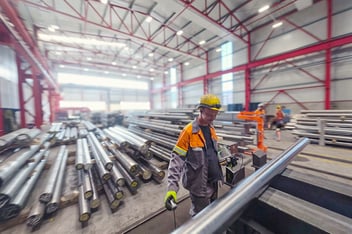
The demands placed on modern materials are constantly increasing. In sectors such as aerospace, medical technology, defense and the chemical process industry, material purity, mechanical properties and complete traceability are decisive for the safety, performance and service life of components.
Special steel projects therefore play a central role in industrial value creation. They combine metallurgical expertise, precise manufacturing processes and close cooperation between customer and manufacturer.
In this interview, Emil Hamzic, Head of Internal Sales for Forged Products at Breitenfeld, explains how such projects are created, which industries currently have particularly high requirements and what new opportunities arise from the company's new forging press.
Sales as an interface between the market and metallurgy
Sales plays a central role when it comes to special materials. It acts as a link between customer requirements, technical feasibility and market potential.
"Sales has the task of recognizing customer needs and market trends at an early stage and matching these with the technical possibilities of our company," explains Emil Hamzic.
This is not just about processing individual inquiries. Rather, the sales department also analyzes whether a project could result in new market segments or additional customers.
If a motorsport customer enquires about a particular material, Breitenfeld examines possible synergies for other requirements in this material. This increases the potential sales for an entire melt batch - an important aspect for efficient steel production
This approach makes it possible to produce new materials economically and at the same time avoid stockpiling.
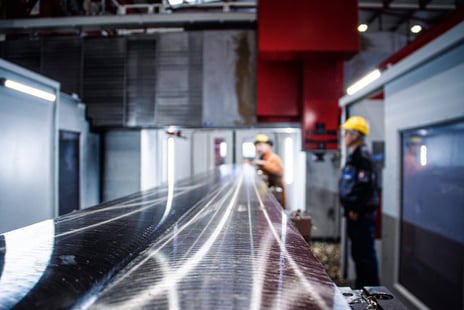
What distinguishes special steel projects from standard products
The difference between classic steel products and special steel projects lies primarily in the development and analysis work involved.
While standard products often have extensive production and application experience, special materials require a much more intensive technical evaluation.
"Special products require significantly more effort - especially in the areas of engineering, technology and production," says Hamzic.
Among other things, the following questions are examined:
- Are there similar materials that have already been produced?
- What experience has been gained with these alloys?
- Are adjustments to chemistry or process control necessary?
The new material is developed - or more precisely: modified- on the basis of these findings.
As a rule, Breitenfeld does not develop completely new alloys, but adapts existing materials to specific requirements.
Adaptation instead of new material development
Many customers approach Breitenfeld with specific technical challenges. These are often problems such as
- insufficient service life of components
- corrosion problems
- fatigue fractures
- insufficient mechanical properties
In such cases, Breitenfeld first analyzes the customer's existing material.
The typical procedure comprises several steps:
- Analysis of the sample
- Examination of chemical composition and degree of purity
- Evaluation of mechanical properties
- Comparison with existing production data
Targeted adjustments can be made on this basis.
One example is the alloying of nickel to improve notched bar impact values at low temperatures or the adjustment of the degree of deformation during forging.
Purity as the key to high-performance materials
In many high-tech applications, the degree of purity plays a key role.
of the material plays a decisive role.
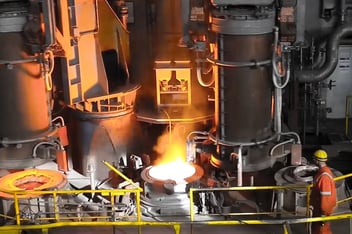
Remelting processes such as ESR (electroslag remelting) or VAR (vacuum arc remelting) are therefore frequently used.
These processes enable significantly higher degrees of purity than conventional manufacturing processes.
"A high degree of micro and macro purity is crucial for critical applications. This often cannot be achieved with open melting processes."
In certain areas, the material is even remelted several times - a process that is used at Breitenfeld as a triple-melt process.
Such requirements are particularly common in the following industries:
- Semiconductor industry
- medical technology
- High-precision applications / watch industry
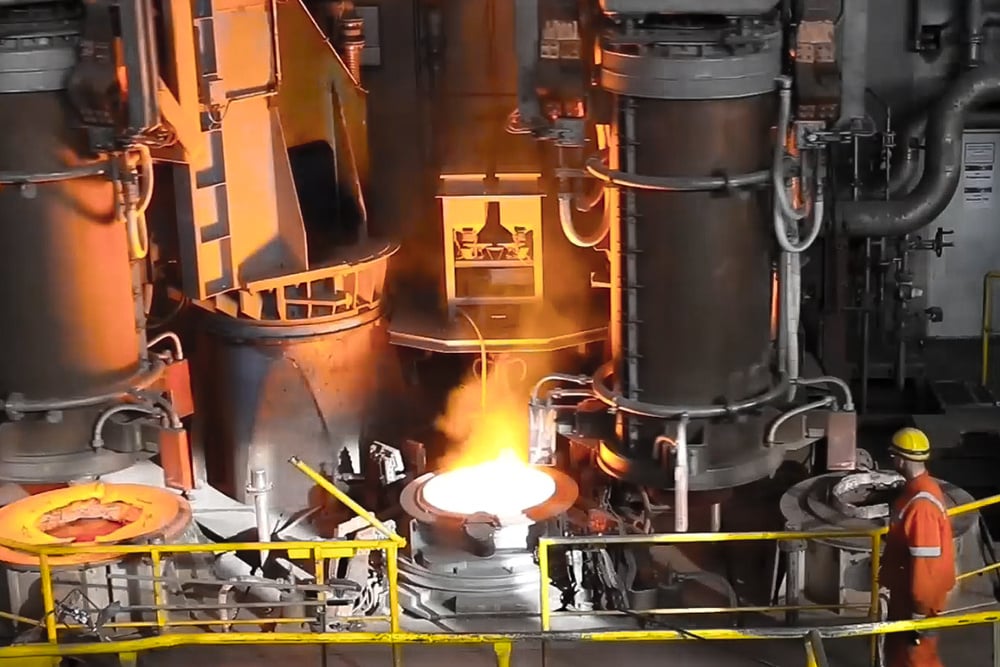
Special steel for high-tech industries
The demand for special materials comes from a variety of industries - some with very different requirements.
Breitenfeld is currently seeing particularly strong demand in the following sectors:
Aerospace
Aerospace places very high demands on material quality, documentation and process stability.
Motorsport
New materials such as S156, 1.6722 VAR or 9310 VAR, which have been specially developed for extreme mechanical loads, are used here.
Defense
Since the beginning of the war in Ukraine, the demand for high-purity, remelted steels has increased significantly. At the same time, the EU is pursuing the goal of strengthening its industrial independence in the defense sector.
Chemical industry
Special steels are used here for safety valves or highly stressed components, for example.
Medical technology
This sector offers great growth potential, but places high demands on approvals and certifications.
Extreme demands on materials
In some applications, materials are pushed to the limits of technical possibilities.
Particularly high requirements arise, for example
- in the semiconductor industry
- in medical technology
- in safety-critical defense applications
Here, materials must have extremely low levels of so-called steel pests such as phosphorus and at the same time achieve the highest mechanical properties.
"We are sometimes operating at the absolute limit of our technical capabilities here."
Such projects require extensive expertise along the entire process chain - from melting and remelting to forging production.
Partners as part of the value chain
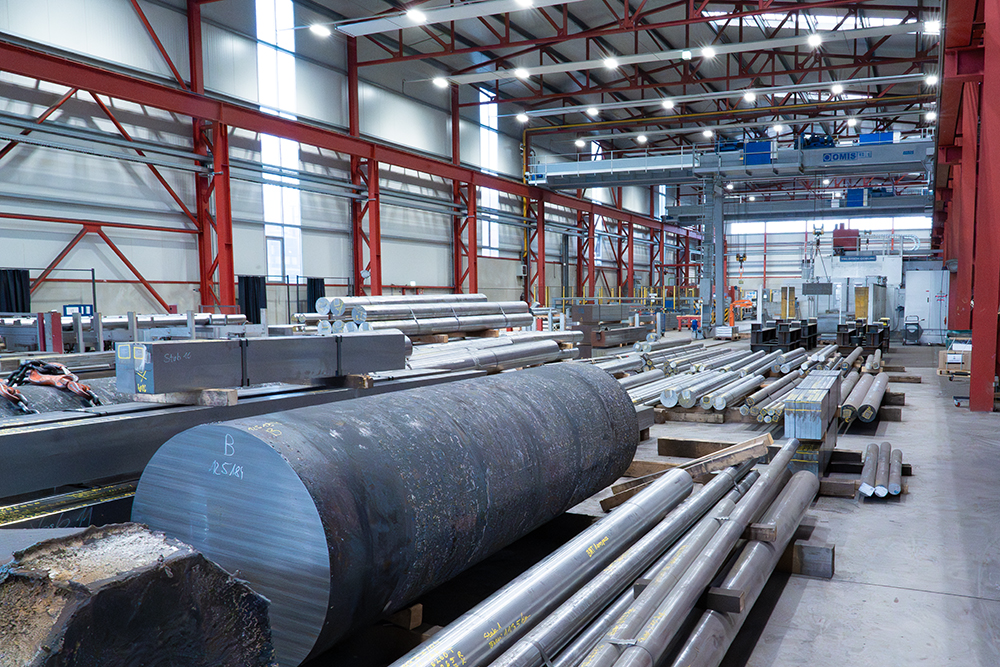
Many forged products are subsequently processed further, for example by rolling them to a different size or machining them.
These partners play an important role in the industrial network.
Breitenfeld often supplies the primary material, while rolling partners take care of further processing. This creates an efficient division of labor along the value chain.
This has an important advantage for customers:
They do not have to worry about procuring the primary material themselves.
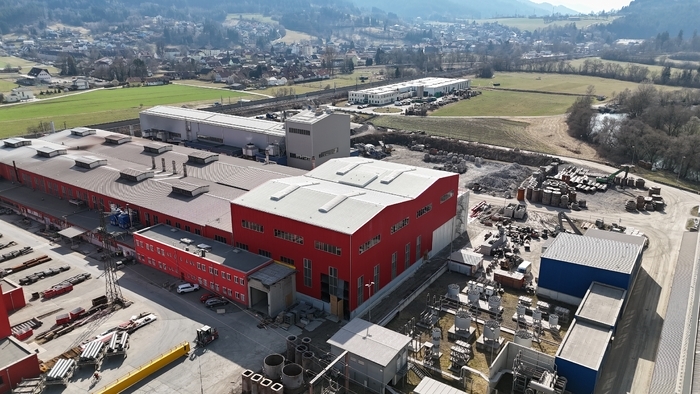
New possibilities with the forging press
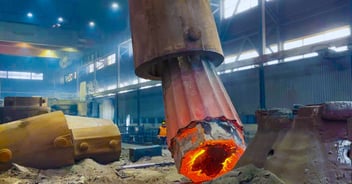
With the new 40 MN forging press, Breitenfeld is significantly expanding its production options.
From a sales perspective, this investment brings several advantages:
- shorter throughput times
- greater cost efficiency
- greater production reliability
- new product possibilities
One decisive factor is the significantly expanded range of dimensions.
"The diameter range increases from around 350 mm to around 850 mm."
In addition, a rail-mounted manipulator enables the production of significantly longer bars.
In future, components up to ten meters long can be manufactured more precisely and with better straightness.
This opens up new possibilities, for example for
- Defense applications
- high-pressure technology
- large machine components
- special rollers
Market trends in the special steel sector
Breitenfeld is currently seeing increasing demand for high-purity special steels, particularly in the defense sector.
In addition, the market has recently refocused on security of supply and technical performance
The fascination of special steel
For Emil Hamzic, the particular appeal of special steel projects lies above all in their diversity.
Every project brings new technical challenges and new insights into industrial applications.
"You get to know new companies, new products and new production possibilities."
For production, such projects also offer the opportunity to test different process variants and continuously gather experience.
Advice for companies with special steel projects
If companies want to start a new special steel project, Hamzic recommends one thing above all: transparency.
Open cooperation between the customer and manufacturer is crucial for success.
Important information includes, for example
- previous material experience
- known defect patterns
- batches used
- technical target parameters
Patience is just as important.
"Special products have different throughput times than standard products."
This is because new materials or process adaptations have to be carefully tested and validated internally.
Conclusion:
Special steel projects are a combination of metallurgical expertise, technical analysis and close cooperation between customer and manufacturer.
With increasing requirements in high-tech industries, the importance of high-purity and precisely specified materials is also growing.
With its experience in remelted special steels and the new forging press, Breitenfeld is expanding its ability to implement such demanding projects - from the initial analysis to the finished forged product.
This makes special steel a key factor for innovation in important industries of the future.
.